In companies and public organizations, food breaks are evolving. Long dominated by packaged products, often high in sugar, they are now being reconsidered. Healthier eating, waste reduction and consistency with CSR commitments are becoming key topics in the workplace.
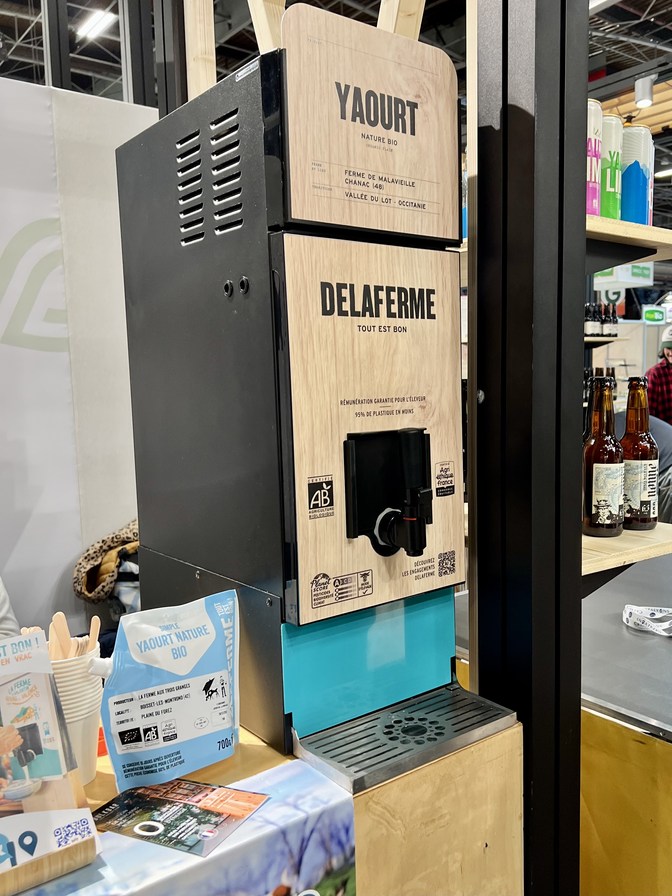
Among the emerging solutions, organic bulk yogurt dispensers are starting to find their place. Still relatively uncommon, they stand out for their simplicity and relevance. This type of system was notably seen at the Natexpo trade show, a key event for organic and sustainable innovations.
What is a yogurt dispenser?
A yogurt dispenser is a distribution system that allows yogurt to be served in bulk, on demand. The yogurt is stored in large containers, often food-grade bags, and dispensed through a compact and easy-to-use machine.
Unlike individual yogurt cups, the dispenser eliminates the multiplication of packaging. Users choose the quantity they want, which also helps reduce food waste. This format is particularly well suited to companies, canteens and shared break areas.
A practical response to environmental challenges
The main benefit of yogurt dispensers lies in their environmental impact. By drastically reducing single-use packaging, they fully align with a zero-waste and eco-responsible approach.
According to the French Agency for Ecological Transition, waste reduction at the source remains the most effective method, well ahead of recycling.
Applied to yogurt, this logic makes complete sense. In companies especially, individual cups can represent several thousand packages per year. Switching to bulk significantly reduces this footprint.
Yogurt dispensers designed for professional use
Yogurt dispensers stand out for their deliberately simple design. Current models often favor a low-tech approach that is easy to maintain and durable over time.
The goal is not to add logistical complexity, but to offer a smooth, everyday solution. Quick installation, easy cleaning and intuitive handling are essential for real adoption by employees.
Some dispensers make it possible to serve organic, farm-produced yogurt sourced from local supply chains. This is notably the case with the solution developed by Bio&Lo, which we recently discovered at Natexpo. It clearly illustrates what these systems can offer when designed as part of a broader, coherent model.
In this approach, the dispenser is only the visible part of a larger system. Milk is processed directly at the source through micro-dairies located on the farm. This local processing allows producers to regain control over added value while ensuring clear traceability.
This short supply chain model limits intermediaries, reduces unnecessary transport and supports local organic farms. It addresses both economic and environmental challenges.
At a time when many dairy farmers struggle to make a living from their production, this approach provides concrete solutions.

Healthy snacking as a driver of workplace well-being
Yogurt naturally fits into the professional environment. Consumed as a snack, it provides protein and contributes to longer-lasting satiety compared to ultra-processed snacks.
According to the Harvard T.H. Chan School of Public Health, fermented dairy products such as yogurt contribute to better overall nutritional quality when consumed without excessive added sugars.
Introducing healthy snacking solutions at work goes beyond a simple treat. A balanced snack helps maintain stable energy levels and reduces fatigue.
Yogurt, nuts and whole grains provide useful nutrients. They support concentration and help manage stress. In sometimes demanding work environments, these small adjustments matter.
In addition, these snack areas often become informal meeting points. They encourage interaction between colleagues and strengthen the sense of belonging. All of this contributes to quality of life at work.
When bulk and snacking naturally complement each other
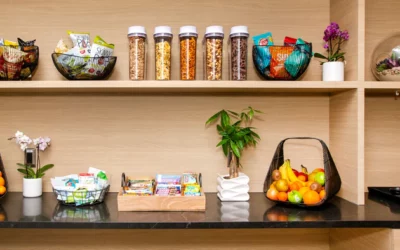
The yogurt dispenser clearly illustrates how different bulk solutions can complement one another. It naturally fits alongside a nut dispenser or a cereal bar. The combination of yogurt, granola and nuts is already well established in eating habits.
In an office setting, this combination makes it possible to offer variety without multiplying packaged products.
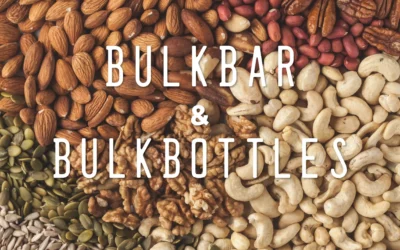
This is the logic behind the snacking solutions offered by BulkBar, which combine bulk, organic products and ease of use. The main objective is to support companies in adopting healthier and more sustainable food practices, without complicating daily routines.
An emerging but promising trend
Yogurt dispensers are still relatively rare in offices today. Yet they address several key challenges: waste reduction, healthier eating, support for local supply chains and improved workplace well-being.
The topic is nevertheless gaining maturity. These solutions reflect a broader evolution in workplace food services, where simplicity and purpose take precedence over overconsumption and systematic packaging.
Published on 09/01/2026