The Future of Work is no longer an abstract concept. It is already shaping the daily lives of millions of people. New employee expectations, changing workspaces and the growing importance of well-being at work. Work is changing fast, sometimes in profound ways.
In this context, companies face very concrete choices. How can we create an attractive work environment while staying aligned with sustainability and CSR goals? How can we support employee energy levels and reduce stress to improve well-being and productivity? This article sheds light on these evolving challenges.
Understanding the Future of Work: what are we really talking about?
The Future of Work refers to all transformations related to work. It covers organisation, tools, workspaces and the relationship people have with their jobs. Remote work is a visible part of this shift, but it is far from the only one.
Employee expectations are also changing. People are looking for more autonomy, purpose and flexibility. Well-being at work is no longer a secondary benefit. It has become a key driver of retention and performance.
According to an analysis by the International Labour Organization, the quality of the work environment has a direct impact on mental health and employee engagement. This trend is confirmed by many European studies.
The Future of Work also affects how work is organised and managed. Companies are moving towards more cross-functional models with fewer hierarchical silos. Decision-making is closer to the field. Project cycles are shorter. Employees expect transparency around governance, priorities and strategy.
This shift deeply transforms the role of managers. Managers are no longer just supervisors. They become facilitators, responsible for clarity, structure and workload balance. This evolution is often cited as a major lever for well-being at work, as it directly influences autonomy and employees’ sense of control.
The office of tomorrow: a place people want to come to
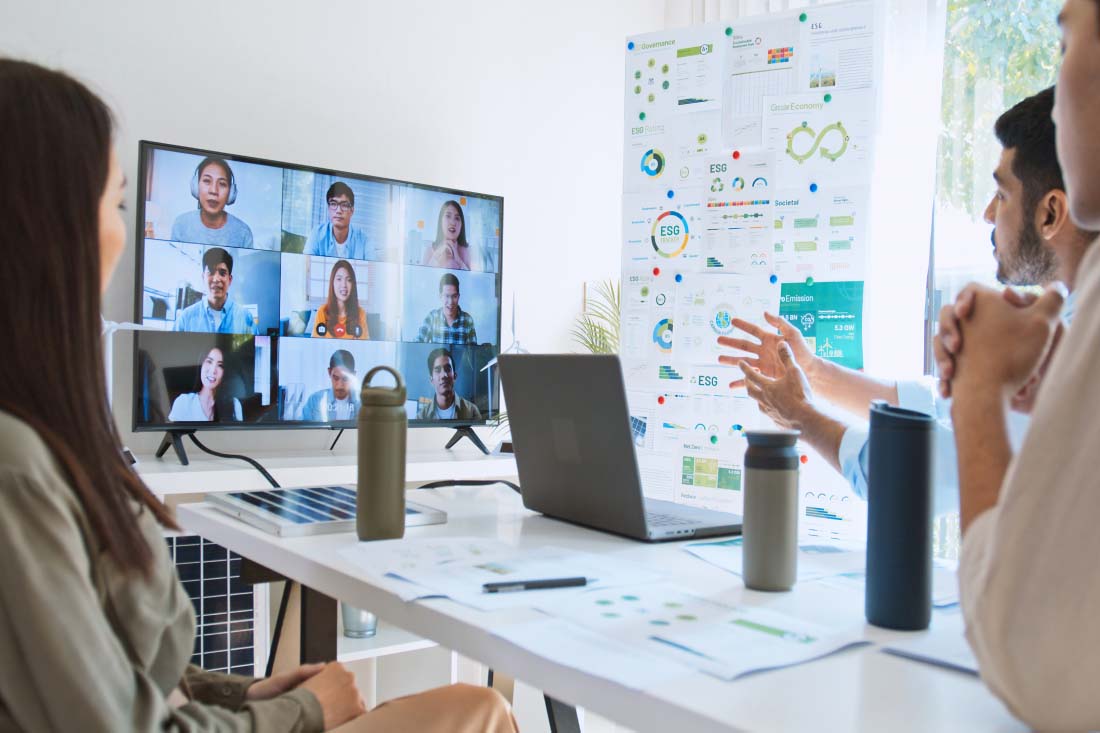
Contrary to some predictions, the office is not disappearing. It is transforming. It is becoming a place for collaboration, exchange and social connection.
Hybrid work, now widely adopted, is not just about alternating between home and office. It raises broader questions around fairness, coordination and communication. Not all roles are equal when it comes to remote work, and this reality affects team cohesion.
The question often comes up: how can we make the office relevant in the age of hybrid work? The answer lies in the on-site experience. If the office offers nothing more than home, it loses its purpose.
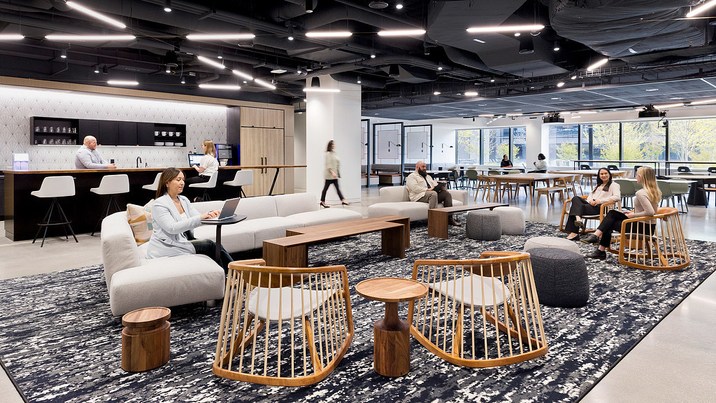
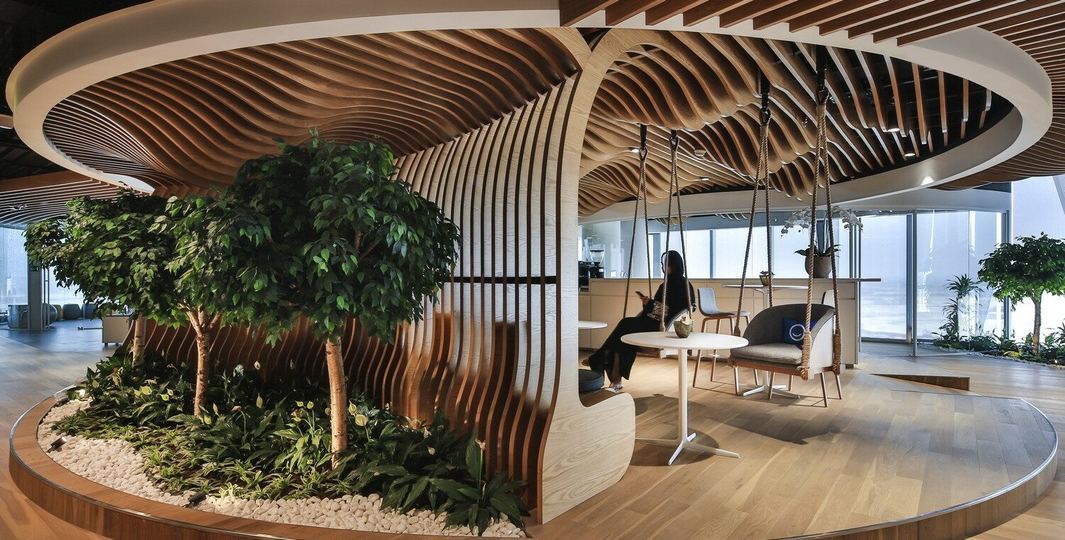
In this new context, office design plays a central role. Natural light, quiet areas and informal spaces all influence concentration and stress management. The work environment is designed to support energy rather than drain it.
Many companies are still looking for the right balance. Too much flexibility can blur reference points. Too many constraints can limit engagement. The Future of Work often relies on gradual adjustments tailored to each organisation’s culture and activities.
Well-being at work: a broader and more holistic approach
The concept of well-being at work has expanded significantly in recent years. It is no longer just about comfort or atmosphere. It now includes real working conditions, health, mental workload and recognition.
Well-being at work is strongly impacted by cognitive load. Excessive meetings, constant notifications and poorly integrated tools increase mental fatigue. Information overload is now identified as a major source of stress.
Within the Future of Work, more and more companies are questioning organisational simplicity. Fewer tools, fewer interruptions, more clarity. This approach supports better focus and more sustainable productivity.
Food is also part of this ecosystem. It influences energy, concentration and mood. Numerous studies show that the right snack can help limit energy crashes during the day. It also contributes to stress reduction.
A publication from Harvard Medical School highlights the link between nutrition, cognitive energy and professional performance.
Office food: a lever that is often underestimated
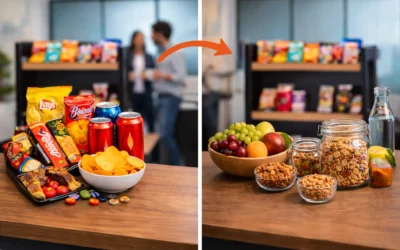
At the office, food choices are often driven by convenience. Sugary drinks, highly processed snacks and similar options. These habits have a direct impact on energy levels and productivity.
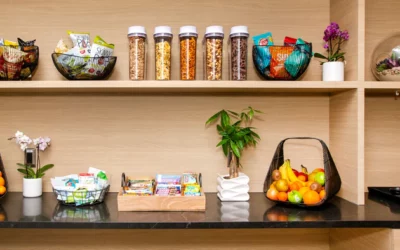
On the other hand, offering healthier options changes the dynamic. When it comes to choosing the right office snacks, the answer is simple: minimally processed products, rich in fibre and essential nutrients. Dried fruit, nuts, grains or granola provide more stable energy and help avoid sudden drops in concentration.
Choosing organic products and zero-waste solutions also fits into a broader sustainability and zero-packaging approach.
Companies such as BulkBar, for example, offer dispensers with organic snacks and cereals designed to reduce packaging waste. The goal remains simple: make healthy snacks accessible without adding complexity to internal operations.
These initiatives are part of a broader reflection on well-being at work and sustainability, two key pillars of the Future of Work.
Future of work and sustainability: converging expectations
The Future of Work is inseparable from environmental challenges. Employees expect companies to act consistently. Sustainability cannot remain an abstract message.
This applies to commuting, buildings and daily consumption habits. Reducing packaging, limiting waste and choosing eco-friendly solutions are becoming increasingly important criteria.
In this context, zero-waste initiatives naturally find their place. They support concrete and measurable CSR objectives and show that sustainability can be embedded in simple everyday actions.
The Future of Work: a gradual construction
The Future of Work cannot be imposed overnight. It is built through a series of coherent decisions. Work organisation, management, work environments and daily habits are closely connected.
Companies that move forward on these topics often observe indirect benefits. Lower absenteeism, higher engagement and a stronger employer brand. Productivity usually follows.
The question more and more leaders are asking is clear: how can we sustainably improve well-being at work without complicating daily operations? The answers often lie in simple actions rooted in the reality of office life.
Published on 21/01/2026