Corporate Social Responsibility (CSR) has become a central topic in strategic discussions. It concerns the way organisations operate, how they consider their stakeholders and how they reduce negative impacts. Long seen as optional, it is now a structuring framework. Yet its definition, obligations and practical applications can still feel unclear.
Defining corporate social responsibility: from responsibility to strategy
Corporate social responsibility means voluntarily integrating environmental, social and ethical concerns into a company’s activity. This does not replace economic objectives but complements them. A responsible organisation looks for balance between performance and impact.
Historically, the concept emerged in the 1960s through reflections on the social role of companies. It gained strength in the 2000s when several standards appeared. ISO 26000 provided an international structure and ESG criteria gave investors clear markers. More recently, European texts, including the CSRD directive, expanded the regulatory landscape.
Corporate social responsibility is no longer only a voluntary approach. For many organisations, it has become a matter of compliance and credibility.
The three pillars of corporate social responsibility
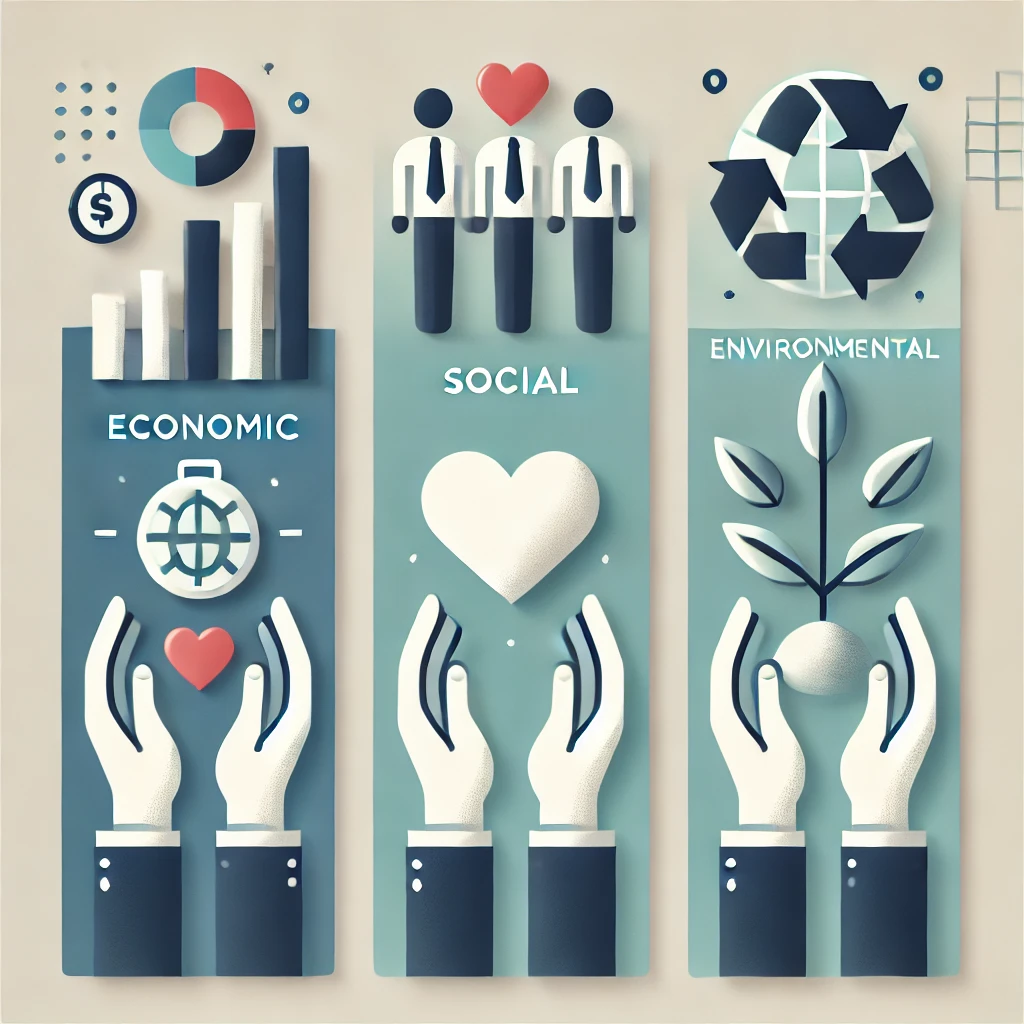
Although each organisation can define its own roadmap, CSR actions generally align with three areas. Each covers a specific scope, though they interact in many ways.
Environment: managing impact
The environmental pillar aims to limit negative effects linked to company operations. This may involve energy management, carbon emissions, water, raw materials or waste.
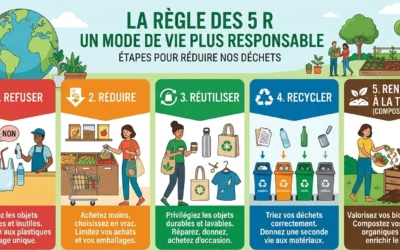
Some companies adopt more efficient practices, such as renovating buildings, optimising logistics or supporting sustainable mobility. Others focus on reducing packaging, improving circularity or integrating recycling into daily operations.
The goal does not have to be spectacular. This pillar often relies on gradual, measurable improvements shared with teams.
Social: quality of life and safety
The social pillar directly concerns employees. It covers quality of life at work, equal treatment, health, safety and inclusion, as well as training and career development. Some organisations focus on ergonomics or accessibility. Others strengthen social dialogue, listening and risk prevention.
There is also a relational dimension. A climate of trust supports collaboration, reduces stress and increases motivation.
Quality of life at work is not limited to physical improvements. It requires transparent management, clear organisation and genuine interest in people.
Governance: transparency and consistency
Governance concerns how a company is managed. It relates to decisions, their justification, internal and external communication and accountability for impacts. It includes transparency, fraud prevention, conflict of interest management and clarity around roles.
Organisations often rely on steering committees, internal charters or written policies. Some involve stakeholders in the process, which strengthens trust. Responsible governance is not only a regulatory matter. It shapes culture, reputation and attractiveness.

Who drives corporate social responsibility within a company
CSR is not the responsibility of a single department. It involves several actors.
Leadership: direction and continuity
Leadership sets the course. Without a clear impulse, initiatives stay fragmented. Committed leaders connect CSR to strategy, allocate resources and ensure coherence. This requires vision. It is not about choosing a few symbolic actions, but about questioning how value is created, how it can be sustainable and how progress will be monitored over time. Leaders may also decide to measure and track specific topics regularly.
Human resources: relationships and working conditions
HR teams play a central role. They manage career paths, recruitment, training, inclusion policies and health and safety measures. They ensure that actions are not only declarative. A redesigned break area, a charter promoting work life balance or initiatives supporting active mobility can improve the employee experience. Continuity is essential. It is not about isolated projects but building a sustainable framework.
Employees: participation
Employees contribute to the success of CSR. Their engagement, their view of priorities and their ability to adopt new practices are critical. Some organisations run workshops, surveys or working groups. When employees participate, actions become more realistic and more anchored in daily life.
Legal obligations: large and small companies
Not all companies face the same requirements. Corporations must publish non financial information describing their impacts and the actions taken to manage them. With the CSRD directive, the number of organisations concerned increases and expectations become higher. Data must follow recognised standards and be verified.
Small companies do not have to publish this type of report. Still, many are indirectly involved. Some respond to calls for tender including CSR criteria. Others want to attract talent or work with large organisations that review socially responsible practices.
Most approaches are progressive. A small company can work on energy use, ergonomics, mobility or workplace conviviality without major resources.

Concrete applications: projects at different scales
CSR appears in many types of actions. Some relate to infrastructure, others to work methods, relationships or individual behaviours. It may involve a renovation strategy, a soft mobility plan, an inclusion policy, a prevention programme or a project for shared spaces.
In some companies, food related initiatives at work may also be considered. They can involve access to healthy snacks or zero-waste solutions to reduce packaging. In France, Belgium and Luxembourg, companies like BulkBar offer systems designed specifically for workplaces.
These initiatives form part of a broader framework focused on well-being, waste reduction and social connection. They do not define CSR but illustrate what can be implemented daily.
Conclusion: an evolving approach
CSR is not a marketing tool or an administrative burden. It is a continuous improvement process. Actions can be modest or ambitious. What matters is that they are consistent, understood and measurable, since credibility depends on progress.
In a context of rising societal expectations, corporate social responsibility is a key element of business strategy. It links economic activity, environmental and human impact and decision making. It encourages reflection on the role of organisations in their environment and on the responsibilities they choose to take on.
Published on 09/12/2025