Nudging, or a “behavioral push”, is becoming increasingly important in discussions about workplace well-being and quality of working life. This approach aims to guide decisions without imposing obligations. It is based on a simple idea: our environment influences our choices, often without us being aware of it.
In an office setting, placing a healthy snack at eye level can change a habit. A visible water carafe can reduce soda consumption. Nudging therefore works in a subtle but meaningful way.

Understanding nudging: definition and principles
The concept was popularized by Richard Thaler and Cass Sunstein. They describe nudging as a slight modification of the choice architecture. It does not remove any options. It simply makes certain decisions easier or more visible.
How nudging applies in the office?
In a work environment, our daily decisions are often automatic. Taking a break, choosing a snack or a drink largely depends on the context. Nudging consists precisely in structuring this environment to make healthy and sustainable options more accessible.
A few illustrations:
– Visibility: place nuts or healthy snacks at eye level instead of candy.
– Accessibility: install an elegant and visible water carafe on meeting tables to naturally reduce soda consumption.
– Subtlety: act in a non-intrusive but effective way to sustainably transform office habits.
The European Commission relies on these principles in its work on behavioural insights. According to its publications, behavioral approaches help guide decisions effectively while respecting individual freedom.
This research shows that small environmental changes can produce direct effects, particularly in terms of health and sustainability.

Why is nudging relevant in the workplace?
The work environment strongly influences habits. In an office, employees make daily decisions related to food, energy use, or waste sorting.
These choices have a direct impact on workplace well-being, productivity, and the overall sustainability of the organization.
A simple example concerns snacks. If the available options are mostly sugary and ultra-processed, they will be chosen first. Choose instead a nut bar or a dispenser with zero packaging cereals, like BulkBar, and the likelihood of opting for a healthy snack increases.
To be effective, nudging must be part of a broader vision. It cannot be seen as a simple marketing technique. Nudging then acts as a facilitator of behavior aligned with the company’s CSR and workplace well-being strategy.
Nudging and healthy eating at the office
Food is one of the most concrete areas where nudging can be applied.
Make the healthy option more visible
The way products are presented influences choices. This translates into a setup that highlights healthy alternatives. Nuts, granola, or whole grains can be placed in transparent containers. Zero packaging solutions allow people to see the ingredients and reinforce the perception of naturalness.
In this logic, a well-positioned nut dispenser attracts more attention than a packaged snack.
The London School of Economics highlights that visibility and ease of access are two key factors in decision-making.
In other words, the most visible and easiest option often becomes the default choice.

Stabilize energy and reduce stress
A snack rich in fiber and protein contributes to more stable energy levels. Nuts and dried fruits help avoid sugar spikes caused by overly sweet snacks.
Better energy management reduces drops in concentration during the day. This improves productivity and limits certain forms of stress.
Go for healthier drinks such as kefir or kombucha to encourage alternatives to sugary beverages.
Nudging does not replace a global workplace well-being strategy. It is a complementary and practical lever.
Nudging and zero waste: encouraging sustainable practices
The application of nudging is not limited to health. It also concerns sustainability and reducing environmental impact.
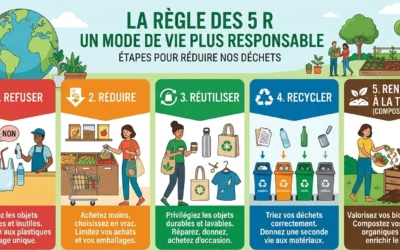
A zero packaging snack system limits individual packaging and promotes a zero waste approach.
The positioning of bins also influences sorting behavior. If the recycling bin is more accessible than the general waste bin, sorting rates increase.
In a consistent CSR approach, workplace design can support environmental goals without imposing constraints.
What are the ethical limits of nudging?
Nudging raises legitimate questions. Some believe it can influence people without them being fully aware of it.
To remain acceptable, it must respect three principles:
– Freedom of choice must be maintained.
– The intention must be clear.
– The collective interest must prevail over commercial interest.
Well-designed nudging promotes autonomy. It does not impose a single standard.
Transparency is essential. These adjustments must improve the employees’ well-being and support sustainability.
A simple tool to transform the work environment
Nudging is based on a deep understanding of human behavior. It shows that our environment influences our decisions more than we think.
In an office, simple adjustments can encourage healthy eating, reduce waste, and support sustainability.
This direct lever helps strengthen consistency between company culture, CSR, and workplace well-being. It does not replace a global HR or sustainability strategy. It complements it.
At a time when companies seek to improve quality of working life and collective performance, nudging in the workplace offers a practical approach. It transforms the break area into a positive impact tool, for both teams and the planet.
Published on 16/04/2026