It’s 2pm. You’ve just finished lunch, and a familiar heaviness sets in. In the middle of a meeting or a complex task, you’re fighting off the well-known “afternoon slump.” Faced with this energy dip, the usual reflex is often to reach for more coffee or a sugary snack. What if a different approach involved better organizing your eating times instead?
In recent years, intermittent fasting — particularly the 16/8 method, which alternates 16 hours of fasting with an 8-hour eating window — has been gaining growing interest.
But is intermittent fasting really compatible with a workday? Can it help maintain steady energy and good focus? And above all, how can it be worked into daily life without turning meals into a source of stress?
Intermittent fasting and performance at work
Easing the afternoon slump
The tiredness that follows lunch can have several causes: circadian rhythm, sleep quality, the amount eaten, and the composition of the meal, among others. All of these can affect how drowsy you feel in the afternoon.
A particularly heavy meal, or one rich in refined carbohydrates, can also trigger significant blood sugar swings.
Intermittent fasting changes eating habits and can help improve certain metabolic markers. However, its effects vary from person to person and depend largely on overall diet quality.

Focus and mental clarity
The idea that the brain necessarily performs worse when you skip breakfast also deserves some nuance. The body has several energy sources available and can adapt without food intake.
During a fasting period, insulin levels drop and the body gradually draws more on its energy reserves. Some research suggests intermittent fasting may have interesting metabolic effects, though results on its direct impact on cognitive performance and focus in humans still need further study.
In other words, some people feel lighter and sharper working before their first meal, while others may instead feel hungry or experience an energy dip.
Saving time day to day
Beyond the nutritional angle, intermittent fasting can also simplify daily organization.
Skipping breakfast can, for some people, free up time in the morning to sleep a little longer, exercise, or simply start the day more calmly.
The challenges of intermittent fasting at work
Social pressure and office treat culture
The main challenge can sometimes be social. Between pastries brought in by a colleague, biscuits at a meeting, or team breakfasts, there are plenty of opportunities to eat in the morning at the office.
Following intermittent fasting doesn’t mean you have to isolate yourself, though. You can still take part in these social moments without necessarily eating — for example, over a black coffee or tea, if that fits your habits.
The goal is mainly to find an approach that works with your professional and social life, rather than following a rule rigidly.
A necessary adjustment period
Changing your eating habits also takes time to adjust to. In the first few days, some people may feel more hungry, tired, or irritable, or experience headaches.
Rather than jumping straight to a 16-hour fast, it can be more comfortable to start gradually — for example, with a 12-hour window, then possibly 14 hours, depending on how you feel.
If someone experiences significant fatigue, feels unwell, or notices a drop in their capacity to work, it’s best to stop or adjust the approach.
Not a one-size-fits-all practice
Intermittent fasting isn’t a universal solution. It can be particularly difficult to reconcile with certain jobs that require significant physical effort, highly irregular hours, or a demanding pace of work.
It’s also not recommended in certain situations, such as during pregnancy or breastfeeding, or for people with a history of eating disorders. In case of a health condition or medical treatment, it’s best to seek advice from a healthcare professional before changing your diet.

How to fit intermittent fasting into your workday
Choosing the right eating window
For someone wanting to try the 16/8 method, a fairly simple approach is to eat the first meal around midday and close the eating window around 8pm.
This setup makes it possible to still share lunch with colleagues and have dinner at home in the evening.
That said, there’s no single ideal window that works for everyone. What matters most is finding a rhythm that fits your working hours, sleep, activities, and dietary needs.
Making the most of your first meal
The meal that follows the fasting period deserves particular attention. Rather than reaching straight for very sugary or heavily processed foods, it’s better to opt for a varied, satisfying meal.
Protein, fibre, fruit, vegetables, whole grains, seeds, and nuts can all help make up a balanced diet.
The goal, then, isn’t simply to “get through” 16 hours, but to make the most of the eating window with varied, quality food.

Hydration: an essential pillar
Staying well hydrated remains important during a fasting period. Water is the go-to choice.
Depending on personal habits, unsweetened tea or coffee can also be consumed during the fasting period, as long as they’re well tolerated.
Good hydration supports the body’s normal functioning and can help avoid mistaking thirst for hunger.
The BulkBar reflex: a practical break at the office
This is exactly the logic behind BulkBar: offering a practical solution for food breaks at work, without needing to leave your desk.
Nuts, seeds, dried fruit, and other ingredients can have a place in a balanced diet — especially when eaten in appropriate portions and as part of a varied diet.
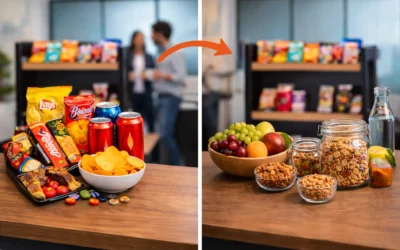
Thanks to a dispenser installed directly in the workplace, employees can easily access healthy, organic alternatives. These snacks are far preferable to the very sugary or ultra-processed snacks found in traditional vending machines.
And because a balanced diet also goes hand in hand with sustainability, BulkBar is part of a sustainable approach too. Bulk distribution helps reduce individual packaging, and the dispenser runs without electricity.

Conclusion
Intermittent fasting is an interesting way to organize meals and simplify certain eating habits. It isn’t a miracle solution that automatically improves energy or productivity at work.
Its value depends mainly on the individual, their lifestyle, and overall diet quality. For some, skipping breakfast can help them feel lighter and better organize their morning. For others, eating from the morning onward remains essential to feeling good.
At the office, the key is finding a balance between organization, varied nutrition, hydration, and wellbeing.
Published on 08/09/2026