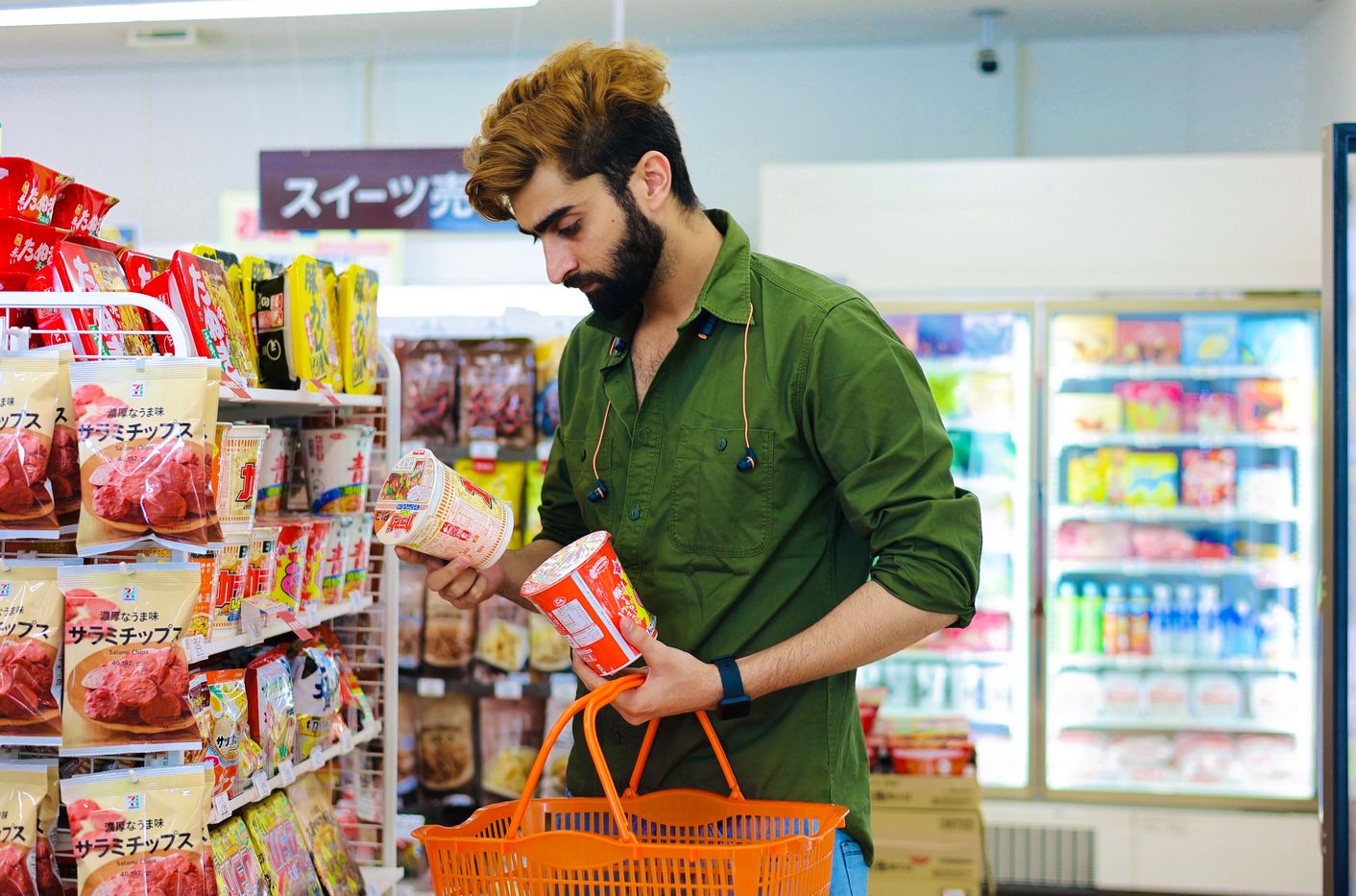
On the shelves, snacks can sometimes all seem equally healthy. “Natural,” “organic,” “high in fibre,” “no added sugar,”… Packaging uses a wide range of claims to highlight certain qualities of a product.
But a catchy slogan doesn’t necessarily tell you what a snack actually contains.
The good news is that it only takes a few seconds to read a label more carefully. Here are the main reflexes to adopt before choosing your next healthy snack.
Does a snack labelled “healthy” always contain little sugar?
No, not necessarily.
The word “healthy” alone doesn’t tell you anything about a product’s nutritional composition. However, certain nutrition claims are regulated under European law.
For example, for a solid food to carry the claim “low sugar,” it must contain no more than 5g of sugars per 100g, provided the other conditions set out in the regulation are also met.
The claim “no added sugar” is also subject to specific conditions. It means, among other things, that no mono- or disaccharides have been added to the product, nor any other ingredient used for its sweetening properties. When a product naturally contains sugar, this must be indicated.
In other words, “no added sugar” doesn’t mean “sugar-free.”
To know what a snack really contains, it’s best to look directly at the ingredient list and the nutrition table.
Why can sugar appear under different names?
When looking at an ingredient list, the presence of sugar can be mentioned in many forms.
Sweetening ingredients can appear under different names: sugar or sucrose, glucose, dextrose, glucose-fructose syrup, molasses syrup, fruit juice concentrate, and so on. Anses analysed the composition of more than 54.000 food products and notably highlighted the diversity of names used for sweetening ingredients.
Ingredients are always listed in descending order of weight at the time they’re used in production. The first ingredient is therefore the one present in the largest quantity.
This information helps you understand a product’s general composition, but it doesn’t tell you the precise quantity of sugars. For that, you need to check the nutrition table.
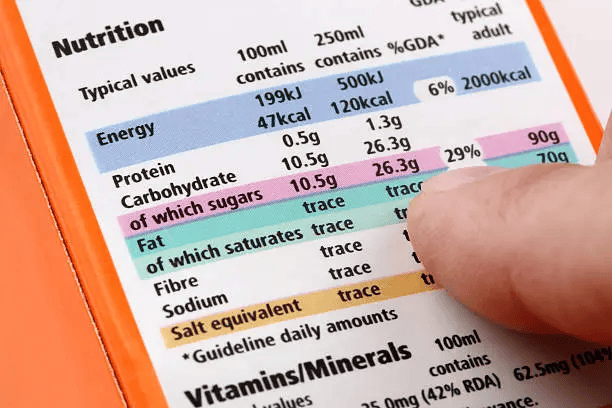
How do you read the nutrition table in 30 seconds?
You don’t need to be a nutritionist to understand the main information on a label.
For pre-packaged foods covered by European regulation, a nutrition declaration must generally be included. It shows the energy value, fat, saturated fatty acids, carbohydrates, sugars, protein, fibre, and salt.
To compare several products, the simplest approach is to look at the values per 100g.
The line to look for is: “carbohydrates – of which sugars.” This line shows the amount of sugars present in the product. However, it doesn’t tell you on its own whether these sugars were added or occur naturally.
That’s why it’s useful to read this information alongside the ingredient list. The nutrition table shows how much sugar is present, while the ingredient list helps you understand where it comes from.
Natural sugars and free sugars: what’s the difference?
This distinction is particularly important when it comes to fruit and dried fruit.
The World Health Organization (WHO) defines free sugars as monosaccharides and disaccharides added to foods and beverages by the manufacturer, cook, or consumer. This definition also includes sugars naturally present in honey, syrups, fruit juices, and fruit juice concentrates.
By contrast, sugars naturally present in whole fruit are not considered free sugars under this definition.
“Healthy” claims worth a closer look
Some claims on packaging are regulated. But they only give specific information about the product.
“High in protein” or “source of fibre”
These claims are regulated under European law and must meet certain conditions to be used.
A product high in protein or fibre can still contain sugar. A single claim isn’t enough to evaluate the whole product.
“Organic”
A product being organic doesn’t automatically mean it’s low in sugar. The organic label tells you about the production method, not its nutritional composition.
To find out more about the organic label, check out our article “What does an organic label guarantee (and what it doesn’t)?“.
Images of fruit
An image of fruit may catch the eye, but it doesn’t replace the ingredient list.
FPS Public Health Belgium notes that the ingredient list is part of the mandatory information for pre-packaged foods. When certain ingredients are highlighted on the label, for example through an image or graphic representation, their quantity may also need to be indicated.
Which snacks should you choose at the office?
At work, snacking can easily become a daily habit. In this context, offering a range of options lets everyone choose according to their tastes and needs.
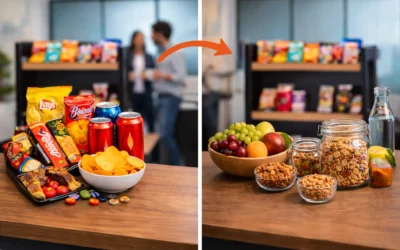
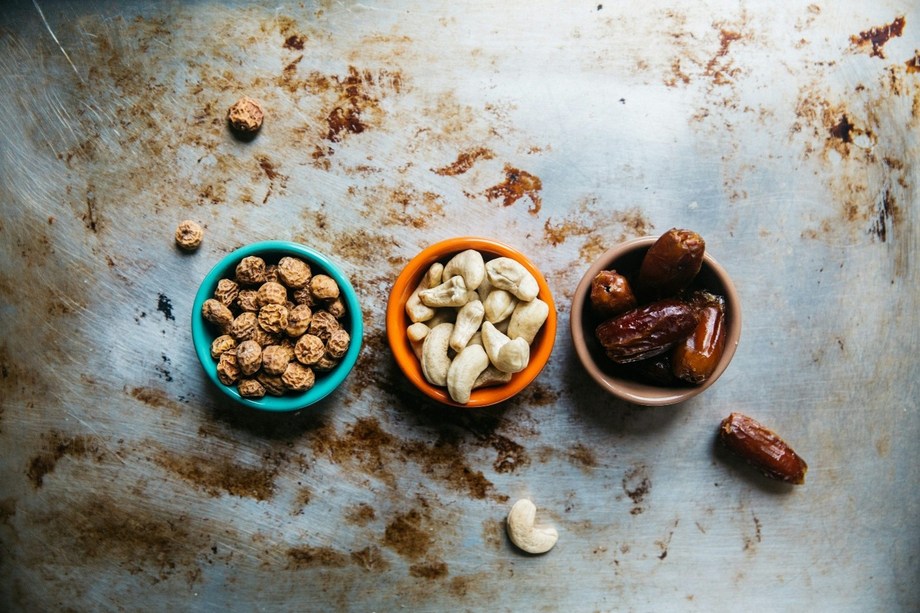
Unsalted dried fruit, nuts and other oilseeds, or seeds can be offered as simple alternatives. The benefit is also being able to easily identify the ingredients that make up the snack.
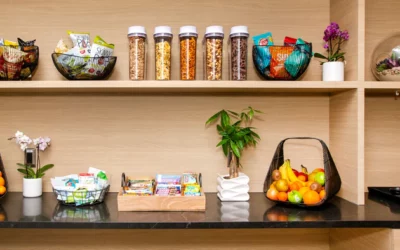
This is one of the advantages of bulk snacking: offering healthy, unprocessed products in a simple format, without piling up individual packaging.
At BulkBar, we favour bulk snacking and products whose composition is easy to identify, giving companies a practical way to make snacks available to their teams. Want to know more?
Healthy Snacks and Sugar – FAQ
Is a “no added sugar” product automatically low in sugar?
No. A product may contain no added sugar at all while still naturally containing sugars, particularly when it’s made from fruit.
How can you quickly spot the amount of sugar in a snack?
Look at the “carbohydrates – of which sugars” line in the nutrition table, ideally per 100g. Then check the ingredient list to understand where these sugars come from.
Is agave syrup automatically better than regular sugar?
Don’t rely solely on an ingredient’s “natural” image. Sugars naturally present in syrups fall under free sugars according to the WHO’s definition.
Published on 24/08/2026