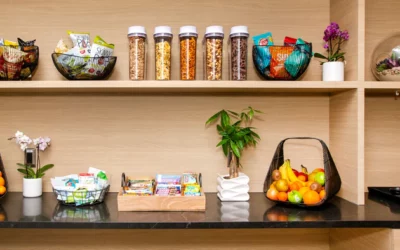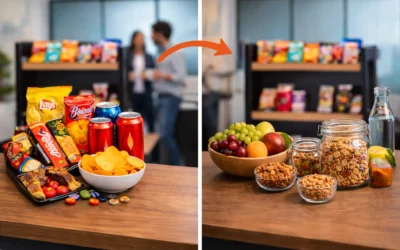
Offering fresh fruit at the office is a great way to launch or enrich a healthy snacking corner. It provides water, fibre, vitamins and minerals, with no unnecessary packaging. To make it work well, a few practical considerations need to be taken into account: quantities, delivery frequency and storage. Dried fruit and nuts can complement the offer, providing a different format for different needs and occasions.
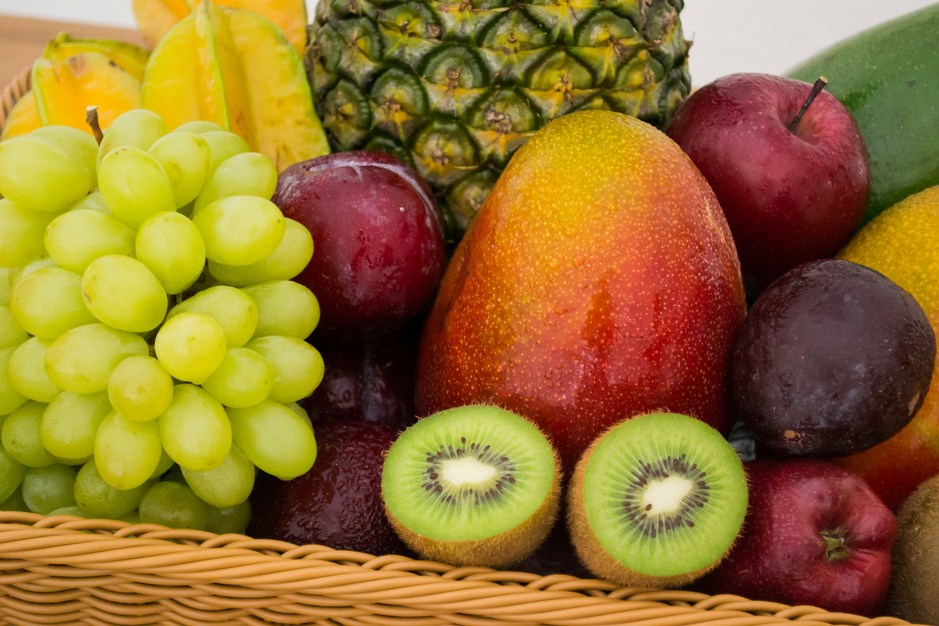
What are the pros and cons of fresh fruit at the office?
A basket of apples, bananas or oranges makes it easy to offer employees a healthy snack, and it is often a hit with everyone.
The nutritional benefits of fresh fruit
Fresh fruit provides water, fibre, vitamins and minerals, and allows people to eat fruit in its whole form. It is a great starting point for a healthy workplace snack offering.
A Refreshing Break
Biting into an apple or peeling an orange is also an opportunity to pause and enjoy a sensory experience that other snacks don’t quite offer in the same way.
Points to Consider
Fresh fruit contains a lot of water, so it is best eaten within a few days of delivery. For businesses that offer it regularly, quantities and delivery frequency need to be adjusted to actual consumption, and storage conditions must also be considered.

How can you reduce food waste when offering fresh fruit at the office?
Getting the quantities right is the most effective way to reduce waste. According to Brussels Environment, food waste accounts for 23% of the waste produced by Brussels companies, or 10,000 tonnes a year.
To make sure your fresh fruit supply matches actual demand, several factors need to be considered:
– team size;
– office attendance versus remote working;
– holidays and quieter periods;
– delivery frequency, adjusted accordingly.
By keeping track of these factors, businesses can make fresh fruit an effective snacking solution while limiting waste. When attendance fluctuates, it can also be useful to complement the offer with products that keep for longer.
Fresh fruit vs dried fruit and nuts: what are the nutritional differences?
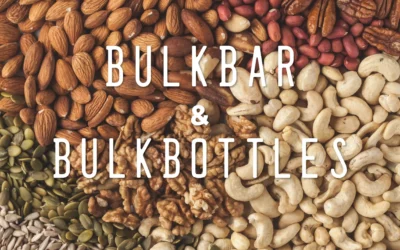
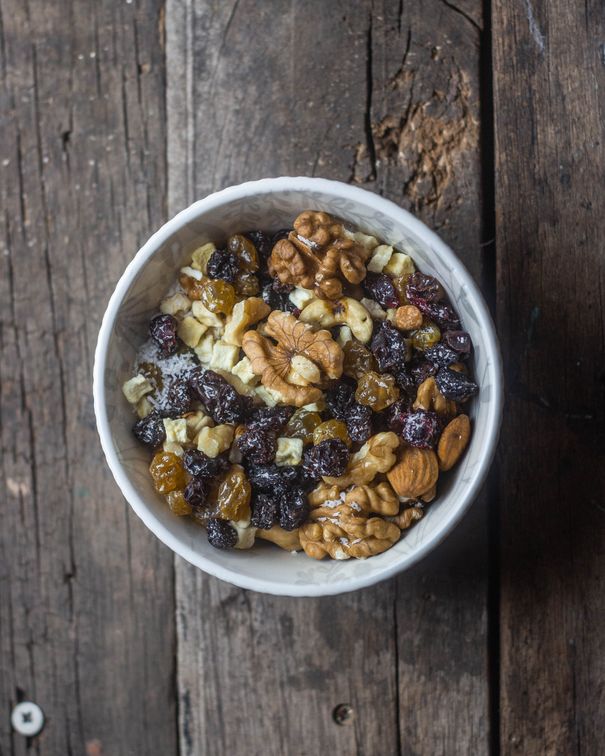
In everyday language, two categories are often grouped together: dried fruit (raisins, apricots, figs and dates, with most of their water removed) and nuts (almonds, walnuts, hazelnuts and cashews).
France’s food safety agency, ANSES, points out that a food’s nutritional value cannot be judged on its energy content alone. Fibre, vitamins, minerals and other beneficial compounds matter too. Fruit, whether fresh or dried, and nuts can all provide valuable nutrients, including fibre, vitamins, minerals and other bioactive compounds.
Water content, energy density and shelf life
Fresh fruit, dried fruit and nuts differ mainly in their water content, energy density and shelf life.
Fresh fruit contains a lot of water, which means it has a lower energy density. It is best eaten within a few days of delivery and offers a refreshing snack, provided supplies are replenished regularly.
Dried fruit has had most of its water removed, making it more energy-dense and compact, with a longer shelf life.
Nuts also have a low water content, a high energy density and a long shelf life. Dried fruit and nuts are convenient options for a quick snack, with portion sizes suited to individual needs.
Why are dried fruit and nuts more energy-dense?
When fruit is dried, much of its water is removed, leaving the nutrients and energy more concentrated in a smaller weight. As a result, a small amount of dried fruit can provide more energy than the same weight of fresh fruit. This makes dried fruit a convenient, energy-dense snack in a compact format, with portion sizes tailored to individual needs.
Shelf life: two complementary approaches
Fresh fruit is best eaten soon after delivery. Dried fruit and nuts are less dependent on immediate consumption, thanks to their much longer shelf life. However, shelf life varies depending on the type of fruit or nut, the drying process, the packaging and storage conditions.
For businesses, offering both means having options to suit different needs and circumstances.
Recommendation: variety rather than either-or
Given the nutritional differences between fresh and dried fruit, ANSES considers that neither can be systematically recommended as the better option based on nutritional criteria alone. Instead, the agency recommends varying the types and forms of fruit.
How to build a snacking offer that suits Your teams
Employees don’t all have the same habits or schedules. A varied snacking offer can help meet their different needs throughout the working day.
Employees working on-site
Some employees take a proper break in the morning. Fresh fruit is a great option for them.
Hybrid teams
When employees work remotely several days a week, office attendance can vary considerably. Combining fresh fruit with products that keep for longer helps ensure there is always something available.
Employees on the Move
Between meetings or while travelling, a small, portable snack can be a convenient alternative to a piece of fresh fruit.
Fresh fruit brings freshness, variety, water, vitamins and fibre. Dried fruit and nuts offer a practical format and a higher energy density. Each has its strengths, and together they cater to a wider range of situations.
FAQ
Is fresh fruit a good snacking option at the office?
Yes. Fresh fruit provides water, fibre, vitamins and minerals, and can be eaten in its whole form. The key is to adjust quantities and delivery frequency to actual consumption.
Should fresh fruit be replaced by dried fruit and nuts?
Not necessarily. According to ANSES, no form of fruit is systematically superior to another. The agency recommends variety, and dried fruit and nuts can complement fresh fruit.
How can you avoid waste when offering fresh fruit at the office?
Adjust quantities and delivery frequency to team size, office attendance and holidays. Waste can also be reduced by complementing fresh fruit with products that keep for longer.
Why are dried fruit and nuts more energy-dense than fresh fruit?
They contain less water, so their energy content is more concentrated by weight. This is why portion sizes matter.
Fresh fruit and package-free snacks: the BulkBar approach
BulkBar provides healthy, package-free snacks for businesses in Belgium, Luxembourg and France. Our range includes dried fruit and nuts, making it easy to complement an existing fresh fruit offer.
The goal is simple: to give employees a choice of snacking options while taking into account the practical differences between fresh and dried products.
Published on 12/10/2026